

As prestigious auction houses face disappointing sales and layoffs, a growing number of collectors are turning to low-end antiquities, finding deep personal connections in small, unassuming artifacts that tell stories of the past.
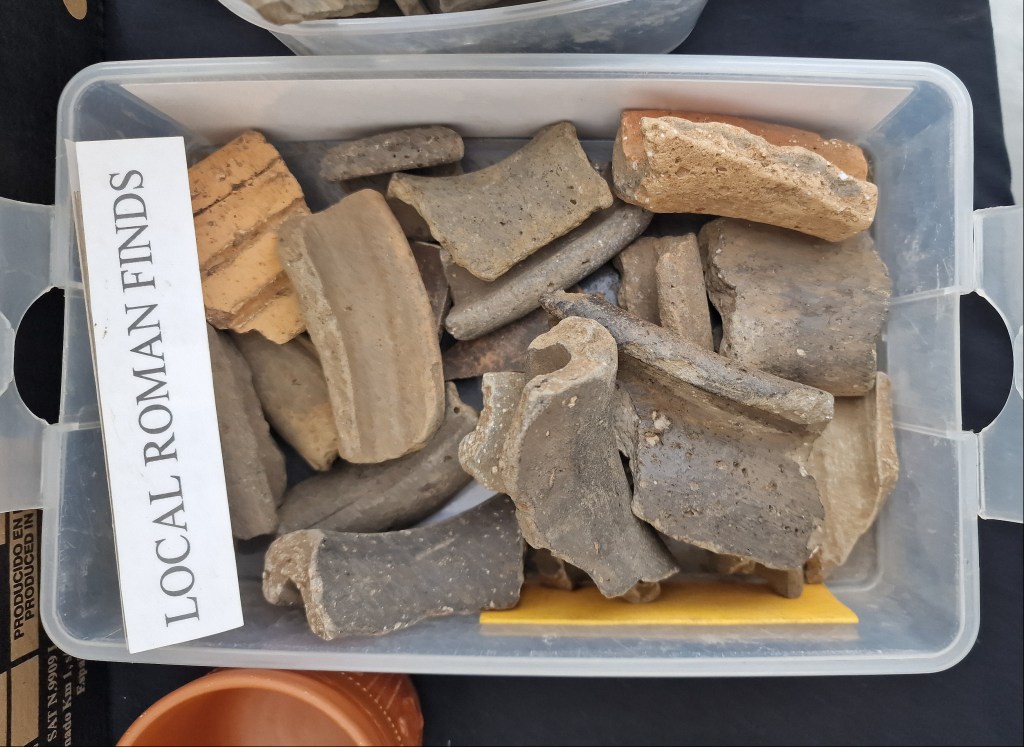
Recent poor sales seasons at prestigious auction houses like Christie’s and Sotheby’s, accompanied by notable layoffs, combined with the burgeoning market for low-end antiquities, seem to signal a significant shift in collectors’ focus. Collecting is no longer primarily about displaying grandiose items like a Greek krater in one’s library. Instead, the demand for smaller, seemingly insignificant objects is on the rise, suggesting a deeper, more personal connection to the past.
The Archaeologist’s Perspective
Archaeologists, driven more by passion than profit (just look at the salaries!), understand the immense value of small finds. Minor artefacts, such as coins or pottery shards, can be crucial in piecing together the history of a site. This has bled into popular culture, Time Team brought this to TV screens every Saturday morning for decades, and more recently the archaeological value of portable antiquities was represented in the British TV series Detectorists, in which the excitement over seemingly mundane discoveries is endearingly portrayed by Terry’s monotonous lecture on Buttons Through The Ages.
The Commodification of Heritage and The Power of Storytelling
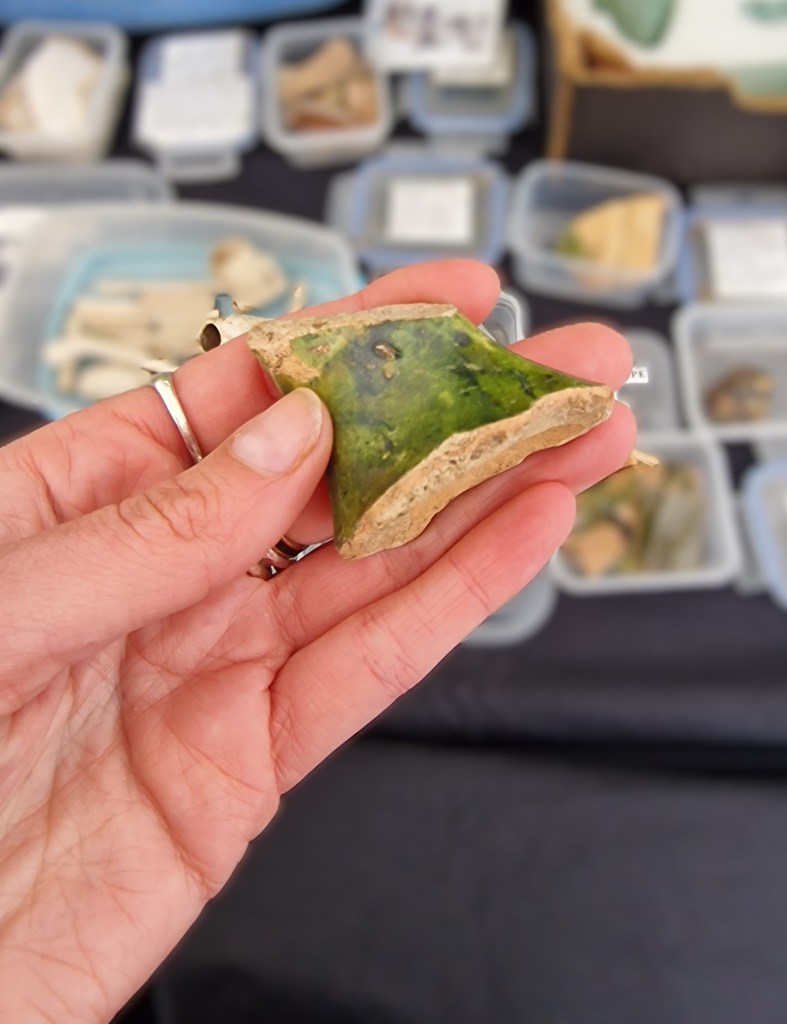
Beyond its archaeological value, to grasp the allure of owning low-end antiquities, we must delve into the commodification of cultural heritage. From a Marxist perspective, a commodity is a product intended primarily for exchange, emerging under capitalism’s institutional, psychological, and economic conditions. Often far removed from their original purpose, antiquities can take on a second life as market commodities. The particular lure of low-end antiquities might lie in their fragmentary nature. Freudo-Marxian theorists like Slavoj Žižek blend psychoanalytic and Marxist perspectives and have explored how commodities possess a unique power to deceive. Thus the stories we weave around small antiquities, though not always accurate, add to their allure. A fragment of green-glazed pottery might seem like mere rubble, but it can evoke vivid imaginations of medieval life, such as a weary cleaner discarding it after a grand banquette.
The low-end antiquities market predominantly features small finds that often lack aesthetic appeal. Authentic ancient jewellery, for instance, can appear quite rudimentary compared to modern replicas. Yet these artefacts attract collectors for their symbolic value. The charm lies in their ability to offer fleeting glimpses into past lives. The green-glazed pottery might just have easily been cherished for centuries before meeting its end at the hands of an Edwardian toddler. Such narratives, though speculative, enhance the object’s charm and deepen our connection to it.
Personal Connections to the Past
Russell Belk’s idea that consumption is an act of self-definition may provide further insight into this phenomenon. Belk posits that relationships with objects involve not just the person and the thing, but also the societal context. In the context of low-value antiquities, perhaps we can extend this relationship to the past, forming a three-way bond between the collector, the object, and its historical owner. This personal connection is further emphasised by dealers who market ancient jewellery as ‘wearable’, suggesting an intimate, almost spiritual link with history. Wearing an ancient ring, one might imagine a distant past where another individual once twirled that very same piece around their index finger.
The Lipstick Effect in Antiquities
In the post-COVID era and amidst economic uncertainty, the rise in low-end antiquities could be seen as a form of the ‘Lipstick Effect’. where consumers indulge in affordable luxuries during tough times. While investing in high-end art remains a distant dream for many, acquiring small pieces of cultural heritage offers comfort and a sense of place. Taking Postmodernists Firat and Venkatesh’s concept of a fractured self, people acquire and possess goods in an attempt to build a sense of self. Applying this to low-end antiquities, perhaps owning a piece of history helps individuals anchor themselves in an ever-changing world. This act of placemaking connects them intimately to history, regardless of their current circumstances. Therefore, perhaps, the shifting focus towards low-end antiquities reveals a growing appreciation for the personal and symbolic connections these objects offer. As the high-end market grapples with instability, the low-end market thrives, perhaps driven by a collective yearning to connect with the past in intimate, meaningful ways.
 Preowned Past
Leave a comment